Mental Health Week

29 04 2011

May 1 to 7 marks the 60th anniversary of Mental Health Week here in Ontario. The Canadian Mental Health Association offers these tips for mental fitness:

  • learn ways to cope with negative thoughts
  • do one thing at a time
  • exercise
  • enjoy hobbies
  • “collect” positive emotional moments

For more about these tips, and information about Mental Health Week events and materials, visit this web site: www.mentalhealthweek.ca


Hamilton needs more than policing to end violence

12 12 2010

Hamilton’s new Mayor, Bob Bratina, has praised recent efforts by Hamilton Police Service (and particularly the ACTION unit) at reducing crime in the downtown core. The Dundas News reports that between May and November of this year, the special ACTION unit’s 40 officers made 657 arrests, laid 960 charges, seized more than $400,000 in illegal street drugs and issued 3,250 offense tickets. Muggings were down, as were life-threatening calls.

(photo: thehamiltonian.net)

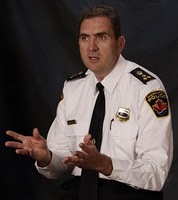
Police Chief, Glenn De Caire, told a recent press conference that he expects to see the crime rate go up as reporting and enforcement efforts continue, but that this translates into increased safety. This is good news for our troubled downtown core, and a commendable accomplishment for our police service. Mayor Bratina has pointed to unruliness, loitering, yelling and public disorder as embarrassing indicators of the downtown’s problem areas (especially the intersection of James and King Sts.). But he and Council will need to look much further and extend their reach considerably if they are genuinely committed to reducing violence in this community.

The focus on downtown, aside from being Mayor Bratina’s ward, has much to do with exposure. It’s part of the city that is on display to all who pass through, and its shady reputation is an oft-cited reason for shopping elsewhere. Those who have worked in the core know that it is an eye-opening sight on any typical day. And yes, there are incidents involving violence. But the bigger picture has yet to be addressed by our elected leaders.

Violence against women, child abuse and sexual exploitation, and elder abuse are (to our shame) alive and well here in Hamilton. These are significant concerns as well as repugnant crimes. No community can claim to be making ground in anti-violence efforts while these horrific crimes continue. It matters not that the “jurisdiction” for addressing these crimes does not rest solely at the municipal level. Our city’s leaders must be the loudest voices among those demanding resources and action from all levels of government. It matters not that rates decline or rise from one year to the next – a sexually abused 3-year old is never an acceptable statistic.

What does matter is that we see these violent crimes as a community-wide issue. Our tolerance for abuse must be zero, and our collective response to the victimization of our citizens must be loud and clear – we  expect the prevention of violence to be a priority in all City actions. That will help to turn attention to the root causes behind some of these crimes, and to the lobbying

Mayor Bratina (photo: Spectator)

and advocacy efforts that are required of our city leaders in order to address those causes. In the same way that we are acting to eliminate poverty in Hamilton, we must act to eliminate violence. The police will be crucial partners in these efforts, but we can’t reasonably expect them to prevent violence on their own.

MPP Sophia Aggelonitis has expressed her concern about these issues in the past, and recently cited the provincial government’s commitment of more than $1 million to Hamilton as part of her government’s anti-violence strategy. We should expect to see part of this money earmarked for violence prevention that goes beyond policing to address the victimization of children, seniors, and women as well as prevention of violent crime in general. Sure, we’d like to see fewer fights in front of Jackson Square. But tidying up the unsightly facade downtown won’t do much in making Hamilton the best place in which to raise a child. In truth, much of the violence in this community is hidden and too rarely spoken about. Elder abuse doesn’t tend to happen on busy streets downtown, nor does child pornography appear in public places very often. These crimes happen in the shadows. They happen in homes. They happen in all parts of Hamilton. And each time they do, the victims are our neighbours, our family members, our friends. These are ugly crimes that leave lasting scars. Preventing them must be high on our new City Council’s agenda.


Alternatives for Youth

20 10 2010

The annual general meeting of Alternatives for Youth (AY) was held this week, and the election of volunteer board members saw a group of dedicated individuals take up the governance and leadership of the agency for the coming year. This is a small organization, not particularly well known, but a vital provider of services for local young people. AY provides substance abuse and addiction counselling and related programs for youth aged 12-23 and their families in the Hamilton area. They operate from a downtown location and several satellites, including numerous school-based locations.

Karen has been working with AY over the past year, assisting in a Review & Renewal process encompassing all areas of the organization. This has been a substantial undertaking for the agency, and has required considerable work on the part of volunteer board members in particular. The agency should be commended for its efforts to strengthen both governance and service delivery, and for its commitment to making valuable and visionary contributions to the Hamilton community. The AY staff team continues to provide much-needed services to young people and their families in the complicated realm of addiction, substance use, mental health and development.

If you are interested in the work of AY, or about volunteering in a governance or other capacity, contact Sue Kennedy, Executive Director, at (905) 527-4469.


On the road for Connections…

15 09 2010

Karen will be facilitating four regional sessions for Connections this month, beginning in St. John’s on September 17th. These sessions will bring together service providers and policymakers for a full day of knowledge exchange about women with substance use issues. Results from Connections’ recent meta-analysis will be shared with participants, who will then inform knowledge exchange planning and strategies to be pursued by researchers during the next phase of Connections’ work. The goal of Connections research is to improve services for women with substance use issues and their children in Canada.  

Scheduled sessions: 

  • Friday, September 17 – St. John’s, Newfoundland
  • Thursday, September 23 – Vancouver, BC
  • Friday, September 24 – Saskatoon, Saskatchewan
  • Friday, October 1 – Ottawa, Ontario

The Canadian Institute of Health Research (CIHR) provided $1.4 million in funding over 5 years for Connections research. The objective is to identify the research needs of nearly 800 agencies working with women who have substance use issues across Canada, and to then develop, implement and evaluate knowledge translation and exchange strategies.  

Connections spokesperson, Alison Niccols, says “findings will help improve services, reduce costs (in terms of crime, unemployment, neonatal intensive care, etc.), and ultimately improve the health of a vulnerable, marginalized population of women and children at high risk for poor outcomes”. The research is timely, she points out, given that substance abuse during pregnancy has been identified as a major public health concern. At least 24,000 Canadians under the age of 21 have Fetal Alcohol Spectrum Disorder and the annual cost to Canadians is more than $344 million according to Connections. 


Maternal use of alcohol and other drugs can have profound effects on child health and development. Many women who continue to abuse substances after childbirth have challenging life circumstances, including lack of affordable housing, diminished capacity for parenting, and difficulties providing stable, nurturing environments for their children. 


Led by researchers from McMaster University and McMaster Children’s Hospital, the Connections project involves collaboration among researchers from the Centre for Addiction and Mental Health, the University of Toronto, the University of Western Ontario, and the University of British Columbia.   

For more information: www.connectionscanada.ca 


Connections – if you work with women who have substance abuse issues…

5 09 2010

I will be facilitating four regional networking sessions across Canada later this month for Connections, a knowledge exchange network for agencies serving women with substance abuse issues.

The goal of Connections research is to improve services for women with substance use issues and their children in Canada. Children born to women who used substances during pregnancy are at greater risk for health and developmental problems. Women who continue to use substances after childbirth may have diminished capacity for parenting and have their own social and health problems” (from the Connections web site).

If you work in the substance abuse field, and particularly with women, check out the Connections web site and watch for us in St. John’s, Ottawa, Saskatoon and Vancouver.

www.connectionscanada.ca