Hamilton Changemakers

13 07 2013

park_kids

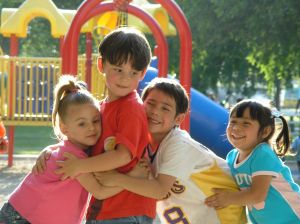
What if all children in Hamilton were thriving? What would that make possible? What conditions need to be in place for that to happen?


These were the central questions that brought together a room full of Hamiltonians this past week to think about creating the future we all want for our community. The afternoon gathering was hosted by the Community Child Abuse Council, Alternatives for Youth, and Hamilton Food Share. These three agencies have applied some of the thinking and approaches developed by Creating the Future, a “living laboratory” devoted to social progress co-founded by Hildy Gottlieb and Dimitri Petropolis. As local early adopters of this work, these agencies have been inspired to pursue vision-driven change in what many would see as very different areas of endeavour – child abuse, addiction, hunger. In fact, all share similar visions of a thriving community.

Seeing an opportunity to join together in this shared pursuit, these 3 organizations invited their key partners and supporters to gather for a conversation about what would be possible if we all aimed for the same goal: a thriving community. The resulting “Gathering of Changemakers” event brought together 40+ community leaders, thinkers, and visionaries from across a wide swath of the Hamilton community, including health, social services, policing, business, service clubs, funders, and others. Special guests, Hildy Gottlieb and Dimitri Petropolis of Creating the Future, engaged the gathering in a series of discussions focused on highest potential and the steps needed to realize our shared vision of a thriving Hamilton.

inspire


And what a conversation it was! We learned that while we may sometimes disagree on the “how”, we share the same aspirations and values – we want everyone in our community to thrive, knowing that our community overall will thrive as a result. And, despite some early doubts about whether this goal is actually achievable, we learned that we already know what is required to make our desired future happen. Just as we’re able to get to the airport on time when we leave on a trip, we are able to identify the steps we need to take in order to get to our shared goal. We work backwards to figure out what we need to do (e.g. what time to set our alarm so we don’t miss our flight). The starting point is our vision, and from there we simply need to identify the favourable conditions that will get us there. It’s something we do every day, in virtually every part of our lives, but we aren’t doing it in our efforts to achieve the future we want for our community.

It’s going to take practice. We’re going to have to ask different questions, and challenge some of the assumptions we’ve inherited about people, systems, and the impact each of us is having on the future of our world each and every day (whether we do so consciously or not). And we’re going to need more Hamiltonians to join us in this ongoing conversation. We’ll be working on these things, and talking to each other about next steps. And we know this isn’t going to result in overnight change. But imagining what would be possible if all children in our community were thriving has us excited enough to keep moving forward in this direction – finding our commonalities, working from our shared values, and aiming at the highest possible potential for the community we all care about so deeply.

Stay tuned!


Mental Health Week

29 04 2011

May 1 to 7 marks the 60th anniversary of Mental Health Week here in Ontario. The Canadian Mental Health Association offers these tips for mental fitness:

  • learn ways to cope with negative thoughts
  • do one thing at a time
  • exercise
  • enjoy hobbies
  • “collect” positive emotional moments

For more about these tips, and information about Mental Health Week events and materials, visit this web site: www.mentalhealthweek.ca


Alternatives for Youth

20 10 2010

The annual general meeting of Alternatives for Youth (AY) was held this week, and the election of volunteer board members saw a group of dedicated individuals take up the governance and leadership of the agency for the coming year. This is a small organization, not particularly well known, but a vital provider of services for local young people. AY provides substance abuse and addiction counselling and related programs for youth aged 12-23 and their families in the Hamilton area. They operate from a downtown location and several satellites, including numerous school-based locations.

Karen has been working with AY over the past year, assisting in a Review & Renewal process encompassing all areas of the organization. This has been a substantial undertaking for the agency, and has required considerable work on the part of volunteer board members in particular. The agency should be commended for its efforts to strengthen both governance and service delivery, and for its commitment to making valuable and visionary contributions to the Hamilton community. The AY staff team continues to provide much-needed services to young people and their families in the complicated realm of addiction, substance use, mental health and development.

If you are interested in the work of AY, or about volunteering in a governance or other capacity, contact Sue Kennedy, Executive Director, at (905) 527-4469.


On the road for Connections…

15 09 2010

Karen will be facilitating four regional sessions for Connections this month, beginning in St. John’s on September 17th. These sessions will bring together service providers and policymakers for a full day of knowledge exchange about women with substance use issues. Results from Connections’ recent meta-analysis will be shared with participants, who will then inform knowledge exchange planning and strategies to be pursued by researchers during the next phase of Connections’ work. The goal of Connections research is to improve services for women with substance use issues and their children in Canada.  

Scheduled sessions: 

  • Friday, September 17 – St. John’s, Newfoundland
  • Thursday, September 23 – Vancouver, BC
  • Friday, September 24 – Saskatoon, Saskatchewan
  • Friday, October 1 – Ottawa, Ontario

The Canadian Institute of Health Research (CIHR) provided $1.4 million in funding over 5 years for Connections research. The objective is to identify the research needs of nearly 800 agencies working with women who have substance use issues across Canada, and to then develop, implement and evaluate knowledge translation and exchange strategies.  

Connections spokesperson, Alison Niccols, says “findings will help improve services, reduce costs (in terms of crime, unemployment, neonatal intensive care, etc.), and ultimately improve the health of a vulnerable, marginalized population of women and children at high risk for poor outcomes”. The research is timely, she points out, given that substance abuse during pregnancy has been identified as a major public health concern. At least 24,000 Canadians under the age of 21 have Fetal Alcohol Spectrum Disorder and the annual cost to Canadians is more than $344 million according to Connections. 


Maternal use of alcohol and other drugs can have profound effects on child health and development. Many women who continue to abuse substances after childbirth have challenging life circumstances, including lack of affordable housing, diminished capacity for parenting, and difficulties providing stable, nurturing environments for their children. 


Led by researchers from McMaster University and McMaster Children’s Hospital, the Connections project involves collaboration among researchers from the Centre for Addiction and Mental Health, the University of Toronto, the University of Western Ontario, and the University of British Columbia.   

For more information: www.connectionscanada.ca 


Connections – if you work with women who have substance abuse issues…

5 09 2010

I will be facilitating four regional networking sessions across Canada later this month for Connections, a knowledge exchange network for agencies serving women with substance abuse issues.

The goal of Connections research is to improve services for women with substance use issues and their children in Canada. Children born to women who used substances during pregnancy are at greater risk for health and developmental problems. Women who continue to use substances after childbirth may have diminished capacity for parenting and have their own social and health problems” (from the Connections web site).

If you work in the substance abuse field, and particularly with women, check out the Connections web site and watch for us in St. John’s, Ottawa, Saskatoon and Vancouver.

www.connectionscanada.ca