Hamilton Changemakers

13 07 2013

park_kids

What if all children in Hamilton were thriving? What would that make possible? What conditions need to be in place for that to happen?


These were the central questions that brought together a room full of Hamiltonians this past week to think about creating the future we all want for our community. The afternoon gathering was hosted by the Community Child Abuse Council, Alternatives for Youth, and Hamilton Food Share. These three agencies have applied some of the thinking and approaches developed by Creating the Future, a “living laboratory” devoted to social progress co-founded by Hildy Gottlieb and Dimitri Petropolis. As local early adopters of this work, these agencies have been inspired to pursue vision-driven change in what many would see as very different areas of endeavour – child abuse, addiction, hunger. In fact, all share similar visions of a thriving community.

Seeing an opportunity to join together in this shared pursuit, these 3 organizations invited their key partners and supporters to gather for a conversation about what would be possible if we all aimed for the same goal: a thriving community. The resulting “Gathering of Changemakers” event brought together 40+ community leaders, thinkers, and visionaries from across a wide swath of the Hamilton community, including health, social services, policing, business, service clubs, funders, and others. Special guests, Hildy Gottlieb and Dimitri Petropolis of Creating the Future, engaged the gathering in a series of discussions focused on highest potential and the steps needed to realize our shared vision of a thriving Hamilton.

inspire


And what a conversation it was! We learned that while we may sometimes disagree on the “how”, we share the same aspirations and values – we want everyone in our community to thrive, knowing that our community overall will thrive as a result. And, despite some early doubts about whether this goal is actually achievable, we learned that we already know what is required to make our desired future happen. Just as we’re able to get to the airport on time when we leave on a trip, we are able to identify the steps we need to take in order to get to our shared goal. We work backwards to figure out what we need to do (e.g. what time to set our alarm so we don’t miss our flight). The starting point is our vision, and from there we simply need to identify the favourable conditions that will get us there. It’s something we do every day, in virtually every part of our lives, but we aren’t doing it in our efforts to achieve the future we want for our community.

It’s going to take practice. We’re going to have to ask different questions, and challenge some of the assumptions we’ve inherited about people, systems, and the impact each of us is having on the future of our world each and every day (whether we do so consciously or not). And we’re going to need more Hamiltonians to join us in this ongoing conversation. We’ll be working on these things, and talking to each other about next steps. And we know this isn’t going to result in overnight change. But imagining what would be possible if all children in our community were thriving has us excited enough to keep moving forward in this direction – finding our commonalities, working from our shared values, and aiming at the highest possible potential for the community we all care about so deeply.

Stay tuned!



5 Days in Tucson

5 03 2013

After a few years of waiting and wanting, I finally got the opportunity to travel to Arizona last week to take in one of the amazing immersion courses offered by Hildy Gottlieb and the team at Creating The Future (www.creatingthefuture.org). It was worth the wait. Described as a course for “changemakers”, the week brought six of us together (the immersion courses are always limited to a maximum of 10 participants) with Hildy and with CTF co-founder Dimitri Petropolous for an up-close-and-personal exploration of the values, principles, approaches, and thinking that help to aim us (and others) towards our highest potential. Hard work, that. But when done in the company of awesome thinkers and community builders, it was both exhilarating and transformational. I came away feeling like I’d got my mojo back…inspired to reach higher and inspirebetter equipped to bring clarity and vision to my life, my profession, my community. How awesome is that!? The work Hildy and Dimitri are doing has resonated for me since I first stumbled upon The Polyanna Principles and began to explore the thought framework behind Creating The Future. What they’re doing is open and accessible – meant to walk the talk and act as a living laboratory so that we can all see what it looks and feels like to engage community and create an intentional future. Even their board meetings are completely open, online, and welcoming for anyone who cares to join them (just one of many examples of their efforts to show and model while they do). I think it’s the authenticity behind all of this work that first drew my attention and continues to engage me most.

Thanks Hildy and Dimitri. And thank you to the amazing changemakers I had the privilege of spending this wonderful week with. I can’t wait to apply my learning, to hear about your successes, and to build on what we started.


Campaign officially launched…and you can help!

9 04 2012

The Community Child Abuse Council’s Heart of the Open campaign kicked off officially today, beginning an unprecedented effort to raise funds in support of child abuse education, prevention, and treatment programs. Details about the campaign – and how you can help – are  posted on the Council’s web site: www.childabusecouncil.on.ca.


In partnership with the 2012 RBC Canadian Open, the Council is selling “inside the ropes” experience packages, corporate hospitality packages, and group tickets that get golf fans up close and into the action for the RBC Canadian Open’s return to the Hamilton Golf & Country Club, July 23-29. The Council’s team of volunteers will also be on-site at the tournament selling reuseable water bottles and purple awareness ribbons. Proceeds from all campaign activities will support vital prevention, education and treatment programs for child and youth victims of abuse and trauma.

A sizeable lead-off gift from RBC will enable the Council to enhance its current programs and services, but our community has an opportunity to join with RBC and realize an even greater result by supporting the Council’s campaign. Children as young as 3 years of age are currently waiting several months for trauma treatment, and the education and prevention initiatives so crucial to fighting child abuse are in need of financial investment. Remember, 1 in 3 girls and 1 in 6 boys are sexually victimized before reaching adulthood. Here in the Hamilton area, that translates into a significant

number whose lives are affected – shouldn’t we be able to help each and every one of them?

We may never see another opportunity like this one to respond as a community and invest in the lives of our youngest and most vulnerable members – please check out the many ways you can help to support the campaign, and help the Council in its efforts to create a community free of child abuse

.


Leaders for Kids

4 04 2012

I had the pleasure of presiding at the induction of two new Leaders for Kids today at a breakfast event hosted by students at Mohawk College. Leaders for Kids is an initiative of the Community Child Abuse Council, bringing together community leaders from all walks of  life in support of the Council’s vision of a community free of child abuse. These are individuals who step up, speak out, and lend their support to the Council’s work with child and youth victims of sexual abuse and trauma. They go above and beyond, and are recognized as Leaders for Kids in appreciation of their commitment and contributions.

Today’s honourees were Laura Gainey and Vince Isber from RBC, who were both instrumental in the Council’s selection as Local Charity Partner for the 2012 RBC Canadian Open. They join a group of bighearted and generous friends to the Council, all tremendous partners who set an example for community involvement and leadership. Laura Gainey is the first Honourary Leader for Kids ever inducted into this group. In fact, the Council has never before included anyone from outside the Hamilton community. But Laura has embraced our work and supported our efforts in influential ways, and you would be hard-pressed to guess that she wasn’t a Hamiltonian if observing her commitment to local children. Vince Isber is an active and respected community booster, whose involvement with numerous community organizations and projects is admirable. Vince has stepped forward to support the Council in generous ways, and is coordinating the involvement of RBC employees from across this region in the Council’s Heart of the Open fundraising campaign.

These two Leaders for Kids exemplify what it means to get behind a cause and are demonstrating what is possible when leaders offer their talents and ideas to support an important community issue. Laura and Vince visited the Council several months ago, and showed a keen interest in its programs and services provided to abused children and youth. They asked thoughtful questions and followed up by taking action on the things they learned that were needed in order to meet the needs of more youngsters affected by the trauma of abuse. They deserve the honour they received today, and they join an impressive group of like-minded community members who are making a difference each and every day in the fight against child abuse. Congratulations Laura and Vince, and thank you to all our Leaders for Kids.


A few bad apples…

14 03 2011

March is Fraud Prevention Month, prompting a quiz sponsored by CanadaHelps and Capital One concerning charitable giving. To take the online quiz and see how much you know about charitable fraud, click here: http://www.canadahelps.org/.

Charity fraud is rare in Canada despite media coverage that might suggest otherwise. In more than 20 years working in the charitable sector, with dozens and dozens of organizations, I have never once come across actual fraud. We have a reasonably strict system of monitoring and enforcement here in Canada, making it tough to scam donors or operate fraudulent charities. The Canada Revenue Agency (CRA) pulls the plug on those who try, resulting in loss of charitable status or revoked registration.

Mark Blumberg’s Canadian Charity Law List for this month includes examples of this enforcement in action. “CRA has revoked the registration of The Organ Donation & Transplant Association of Canada for excessive fundraising and administrative fees and for involvement in an ‘international donation arrangement'”. Apparently this organization ran into trouble for gifts in kind whose real value didn’t match their reported value. Then there’s Pediatric AIDS Canada/USA, whose registration was also revoked by CRA for high fundraising costs and involvement in an “international donation arrangement that artificially inflated expenditures on charitable activities”.

Both these organizations were included in a recent Toronto Star article about charity fraud (“Plug pulled on charity after audit reveals money misspent”, March 7, 2011). The article essentially deals with six organizations where cases of charitable spending or reporting breaches led to CRA intervention. I point this out because six organizations out of thousands who conduct themselves legitimately is a very small number. Even if there are other, as yet undiscovered, fraudsters out there they remain a very small percentage of Canada’s overall charitable sector. The damage they inflict, however, can be devastating to all.

Donor diligence is the best defense against making contributions to fraudulent causes. But donors should not become alarmed and think that fraud is rampant in Canadian charities. It is not. A very few bad apples make it extremely challenging for legitimate charities to maintain goodwill and donor trust (and often add to the costs of operating a bona fide charity). Volunteers, too, can be skeptical about supporting the sector if they don’t feel their efforts are aligned with legitimate and legal purposes. So there’s much at stake (donors, volunteers, public opinion) for the good apples.

Updated charity laws, aggressive prosecution of lawbreakers, and accessible information for donors and volunteers are all helping to keep fraud to an absolute minimum in Canada. One bad apple is one too many, but it’s important that the entire sector not be branded criminals by a very few examples of cheating, fraudulent fundraising, or illegal scams.

For more information, check these resources:

http://www.canadiancharitylaw.ca

http://www.cra-arc.gc.ca/charities


Success Together

24 02 2011

Many readers of this blog will know that I am a fan of Hildy Gottlieb’s work  (Creating The Future) and I apply a number of her concepts and principles in my practice (thanks Hildy, you spread the love so generously). One of the things I’ve been thinking about lately is a topic Hildy has ranted about many times, and a fundamental question Hildy is always asking: what will it take for the community benefit sector to achieve genuine success (or, the flip side, what’s stopping that from happening?):

Success in the Community Benefit arena doesn’t come from being the smartest and the fastest and the best. Yes, you may become the best funded organization. But success in the Community Benefit world is about – well – Community Benefit! And none of us can do that on our own. It is clear that this sector’s potential can only be reached if we link arms together to create the healthy, vibrant communities we all want. To accomplish that, many of the systems we rely upon in this sector will need to shift, from competitive systems that keep us apart to systems that encourage and nurture interconnectedness and interdependence. [Hildy Gottlieb]

Amen to that.

So, I’ve been thinking about that shift and how to support it. I’m wondering about the figurative linking of arms and how that might tangibly or literally be accomplished in a typical community. There are no shortage of inspiring examples on a global scale (just in these past weeks the Middle East is full of them). Examples can also be found within the ranks of the collective impact movement (see: http://www.ssireview.org/articles/entry/collective_impact/). So what about here, within Hamilton neighbourhoods? How do small community efforts grow to become community benefit successes? That’s been occupying my mind of late, and steering me to seek out viable answers. It seems vital that our local community benefit organizations be encouraged and supported in efforts to join together…to find strength in numbers and influence in shared vision. I’m not talking about merely “collaborating” here, where agencies remain independent and separate while joining together (or appearing to do so) for select purposes. That kind of collaboration has been a diversion for many organizations (particularly small ones with very limited resources) and ineffective for many others. As a requirement of many funders, collaboration has become a challenge for organizations who might be far better served by genuine efforts at unified, targeted advocacy and action. Time-consuming and ineffectual partnerships have kept more than one organization from realizing true innovation. Carefully assessing when, how and with whom to partner is a missing step in many collaborations…it’s often simply a requisite step in the grant application process. To shift from “expected” collaboration to instead focus on shared community outcomes (or collective impact) will take some time and some genuine effort. But I can hear Hildy yelling, “yes, but think of the possibilities if it happens!” and that very thing is what has me giving this considerable attention.

Be the change, the Gandhi-inspired mantra, requires that we model our efforts according to the outcomes we seek. When it comes to local community benefit and the sector upon which so much rests, that means some considerable adjustments will be needed. Stay tuned.


Giving that truly counts

6 12 2010

There has been a lot in the news recently about the trend for giving so-called philanthropic gifts (a goat, school books, water purification tablets, mosquito nets) through various international aid organizations. These are tremendous opportunities to add an additional layer of meaning to the gift-giving act and to make a difference in the lives of ordinary people who need help.

Interested in doing something like this right here in your own community? There are no shortage of opportunities! Be creative, think of the many needs out there, and do something difference-making this year. Here are some ideas to get you thinking in the right direction:

  • sponsor a family through the Children’s Aid Society
  • drop off warm coats to the Salvation Army
  • remember the food bank when you do your grocery shopping
  • purchase a magazine subscription for a local women’s shelter
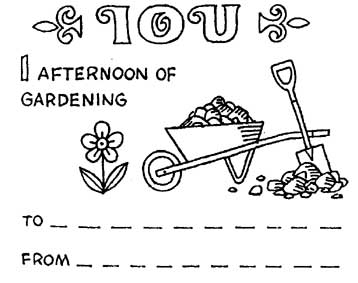
  • introduce yourself as a volunteer by presenting a ‘VOU’ certificate to a worthy organization (provide your contact information and let them know how much time you are willing to give them for a future occasion when they may need it)
  • take up a collection at your holiday gathering and donate it to a local charity
  • invest in the future of Hamilton with a gift to the Hamilton Community Foundation
  • share some of your homebaked goodies with the volunteer dog walkers at the SPCA
  • offer your expertise to a local agency who might otherwise have to pay for a service: tune a piano for a senior’s centre or take care of the snow in an agency parking lot
  • ask your neighbours what they are supporting this year – find out about a need and respond if you can

If you have a favourite charity, call and ask them what they might be needing this holiday season. Many have a wish list of needed items. Check web sites for wish lists and other ideas. Find your own unique gesture that will make a difference, no matter how small. The gifts that keep giving are some of the very best. I find that it feels like the gift was one received rather than given. If you can’t give money, give in another way. It’s the giving that counts.


Congratulations Losani Homes

4 12 2010

‘Tis the time of generosity again, the season when so many look for opportunities to give back, lend a hand, or make a donation. The media is reporting that despite a downturn in Canadian philanthropy overall, Hamiltonians remain generous. Many local charities who depend on this generosity hope that’s true and that it continues. There is so much to be done.

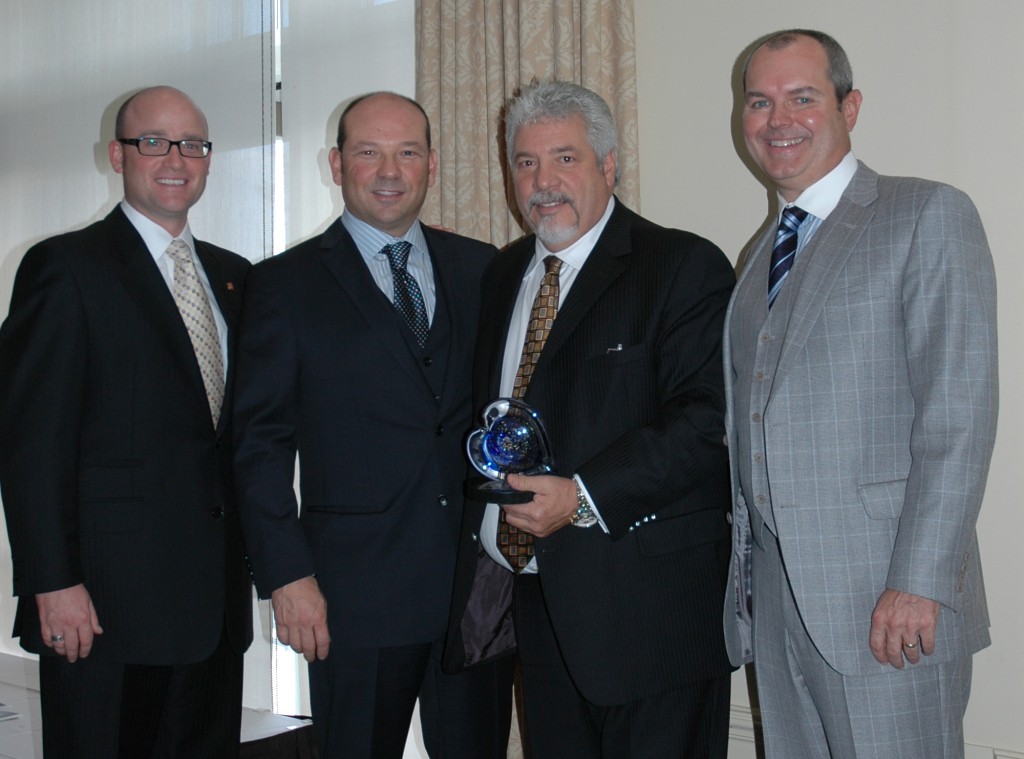
Fred & Lino Losani (centre) receive AFP award

The Association of Professional Fundraisers, Golden Horseshoe Chapter, honours one company each year for its philanthropic support to the community. This year that honour went to Losani Homes, recognized for their leadership and community spirit at a luncheon in November. The company supports many worthwhile causes, including the Community Child Abuse Council, Hamilton Food Share, and the Good Shepherd. And their support is increasing, reaching further to do more for the community. That takes not only a healthy bottom line in business terms, but also a commitment to ongoing philanthropy that is not simply based on quarterly results. Kudos to them for demonstrating just such a commitment and strengthening this community in so many ways.


Alternatives for Youth

20 10 2010

The annual general meeting of Alternatives for Youth (AY) was held this week, and the election of volunteer board members saw a group of dedicated individuals take up the governance and leadership of the agency for the coming year. This is a small organization, not particularly well known, but a vital provider of services for local young people. AY provides substance abuse and addiction counselling and related programs for youth aged 12-23 and their families in the Hamilton area. They operate from a downtown location and several satellites, including numerous school-based locations.

Karen has been working with AY over the past year, assisting in a Review & Renewal process encompassing all areas of the organization. This has been a substantial undertaking for the agency, and has required considerable work on the part of volunteer board members in particular. The agency should be commended for its efforts to strengthen both governance and service delivery, and for its commitment to making valuable and visionary contributions to the Hamilton community. The AY staff team continues to provide much-needed services to young people and their families in the complicated realm of addiction, substance use, mental health and development.

If you are interested in the work of AY, or about volunteering in a governance or other capacity, contact Sue Kennedy, Executive Director, at (905) 527-4469.


World Food Day

16 10 2010

October 16 is World Food Day. This year, the theme of the day is “united against hunger”.

We are fortunate in Canada to be among the world’s healthiest populations and producers of significant amounts of food. From grains to fish, our ability to draw from the land and waters is abundant. Still, we have our own problems with hunger. Many find this surprising, but we nonetheless have a sizeable number of people in this country who do not get adequate food on a regular basis. Food banks, hot meal programs, community gardens, and various public health and community initiatives are aimed at this food insecurity problem. Here in Hamilton, local farmers and concerned donors have joined in the battle against hunger. Hamilton Food Share was out in those fields today, receiving freshly-harvested carrots destined for food banks in the coming days. Increasing the amount of fresh food available to food bank users is just one of the challenges facing local service providers.

In coming weeks Karen will be working with the Hamilton Community Foundation to support a community initiative aimed at bringing enhanced nutrition and food intake to local schools. Hunger hits children particularly hard, negatively affecting their development and learning. More than 8,000 children use local food banks despite breakfast programs and school nutrition initiatives. Watch for future updates about the local food insecurity landscape and the Hamilton Community Foundation initiative.

Of interest, the UN’s Food and Agriculture Organization has a world hunger map indicating levels of food insecurity and hunger around the globe. With the exception of Australia and New Zealand, the current map shows the entire southern hemisphere as being hungry to varying degrees. North of the equator, parts of Central America, Mexico, the Caribbean, China, the Middle East and Southeast Asia are indicated on the map as experiencing some level of hunger but nowhere in North America, Europe, Scandinavia, Japan, or the rest of Asia.

For more information, visit www.fao.org.

To support local food banks, go to: www.hamiltonfoodshare.org. Every $1 in donations raises $5 in food. To support the Hamilton Community Foundation, go to: www.hcf.on.ca.

You can add your name to the worldwide anti-hunger petition by going to: www.1billionhungry.org.