The Economics of Happiness

20 11 2011

If you’re in the Hamilton area you’ll want to check this out…

A free screening of the film The Economics of Happiness, Monday, November 21st at 7pm, St. James Church, 137 Melville St. in Dundas. Tickets available from Picone Fine Foods, 34 King St. West in Dundas or email: dundasintransition@gmail.com. Entrance is free but tickets required.

The Economics of Happiness describes a world moving simultaneously in two opposing directions. On the one hand, government and big business continue to promote globalization and the consolidation of corporate power. At the same time, all around the world people are resisting those policies, demanding a re-regulation of trade and finance—and, far from the old institutions of power, they’re starting to forge a very different future. Communities are coming together to re-build more human scale, ecological economies based on a new paradigm – an economics of localization. [promotional poster]. Film by Helena Norberg-Hodge, Steven Gorelick, and John Page.

This screening is being hosted by Dundas In Transition and by Eco Wham, The Ecological Churches of West Hamilton, and sponsored by Picone Fine Food.

Additional information is also available at: http://www.theeconomicsofhappiness.org


Wielding Power & Influence

7 11 2011

People in power (and men, in particular) continue to make news headlines for their abuse not only of influence but of children. First we saw the horrific video of a Texas family law judge beating his daughter while spewing a venomous tirade of foul and hurtful language. Next it was former Penn State athletics official, Jerry Sandusky, charged with sexually assaulting eight boys between 1994-2009. In this latter case, other school officials have been charged with perjury and with failing to meet their duty to report suspected or known threats to children and an ongoing investigation continues.

Adding to the Penn State scandal, the accused continued to use the university’s facilities after his retirement in 1999 for his work with The Second Mile, a charity he founded in 1977 for at-risk kids. The organization’s web site lists a who’s who of sports icons and hall of famers on its honourary board (including golf great Arnold Palmer, Heisman Trophy winner John Cappelletti, former Steelers Jack Ham and Franco Harris, retired football coach Lou Holtz, current Penn State football coach Joe Paterno, baseball’s Cal Ripken Jr., actor Mark Wahlberg, and corporate notables from Hershey Foods, Quaker State, Ortho Pharmaceutical, and KMart). One wonders how their potential power and influence might be wielded given the circumstances.

“This is a case about a sexual predator who used his position within the university and community to repeatedly prey on young boys,” said state Attorney General Linda Kelly. Despite being arraigned on 40 criminal counts, Sandusky has been released on bail.

The Texas judge, meanwhile, will apparently not face charges due to the length of time that has elapsed since the (videotaped in 2004) beating took place.  Police in the Texas jurisdiction where Aransas County Court-at-Law Judge William Adams resides have announced that they “believe that there was a criminal offense involved and that there was substantial evidence to indicate that and under normal circumstances … a charge could have been made” but that the statute of limitations for such charges stands at five years (CBS News). An investigation by the state’s judicial conduct commission and the Texas Department of Family and Protective Services is still pending.

These are headlines that have crossed international date lines, but will soon simply become state, and then local, coverage as yet another round of high profile cases dims from the spotlight. Whether you live in Texas or Pennsylvania, or in Ontario, it’s ultimately up to us whether the conversation continues…what do we think about a statute of limitations on crimes like child abuse (that often don’t surface for many years)? How do we feel about sexual predators successfully using youth programs to connect with kids? And what do we imagine is the best we can do to help the children who fall prey to these criminals (or may)? What’s our potential influence here, and are we wielding it in the best interests of children?


Classroom exercise sparks bullying debate

3 11 2011

This one has me scratching my head. Let’s see where you weigh in on the debate raging about a New York teacher’s efforts to enlighten her students about the impact of bullying…

If you haven’t already heard about this (now “viral”) item, it’s bouncing around the online news outlets and the blogosphere with lightning speed.

A teacher in New York was teaching her class about bullying and gave them the following exercise to perform. She had the children take a piece of paper and told them to crumple it up, stamp on it and really mess it up but do not rip it. Then she had them unfold the paper, smooth it out and look at how scarred and dirty is was. She then told them to tell it they’re sorry. Now even though they said they were sorry and tried to fix the paper, she pointed out all the scars they left behind. And that those scars will never go away no matter how hard they tried to fix it. That is what happens when a child bullies another child, they may say they’re sorry but the scars are there forever. The looks on the faces of the children in the classroom told her the message hit home.

So what’s the debate? Well, one camp is applauding what they see as a valuable and lasting lesson about the impact of bullying. The other camp is suggesting that this exercise gives bullies reinforcement for their actions by confirming the hurt they can cause. The former notion is an easy one…make an impression on kids, get them thinking about a serious subject, leave them to ponder their position. The latter, however, would appear to be rooted in a firm belief that bullies are a) not already aware of the effect they have, and/or b) motivated by inflicting hurt or harm. It’s certainly not the most optimistic point of view.

The thumbs-up side (supporting this teacher’s exercise as a positive one) appears to be leading the debate by a substantial margin, judging by the online posts and comments I have sampled. That there is discussion, dialogue, or debate at all is good thing. Feel free to add your thoughts.


Time to speak up

29 10 2011

Our local police force released statistics about crime rates last week, garnering attention both for the drop in overall crimes and for the disturbing increase in certain categories. An increase in the number of local murders, in particular, has resulted  in a 4.2% overall increase in violent crimes vs last year. But the increases in sexual assaults against women and children, and in child pornography, are especially alarming.

Media coverage about the numbers (and some local blogs) quoted area politicians’ reactions to the figures, focused on the costs of policing and the difficulties in comparing numbers across municipalities. Hamilton isn’t Muskoka, one Councillor pointed out. The figures are to be reviewed in more detail. Let’s hope that review considers the costs of these crimes to our community not only in a financial context but in the price paid by victims and their families. Crimes against children, in particular, tear at the very fabric of our neighbourhoods and diminish us all as members of this community.

Hamilton is above the Canadian average for violent crimes. And our rate of sexual assaults against children as well as child pornography has been rising. Policing aside, what are we as a community doing about that? Are we talking about it, outraged by it, seeking solutions to change it? There is much to think about given these latest crime statistics. The thinking cannot be limited, however, to the sphere of law enforcement and municipal government. Conversations need to happen in private homes and coffee shops as well – what do we think about the sentencing handed out to those who prey on children? What messages might we send to make sure the vast majority’s outrage over these despicable crimes is understood?

The burden of finding and apprehending the criminals represented in the statistics rests on our Hamilton Police Service. But they cannot and should not stand as our only response to child abuse, woman abuse, or child pornography. These are crimes with roots in societal issues. These are crimes that send powerful messages, of the very worst kind, to kids. Our continued silence won’t do anything to change that.


You can’t be what you can’t see

23 10 2011

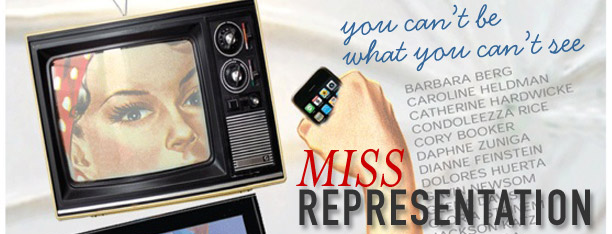
Here’s an exciting and worthy project aimed at empowering young women and changing the portrayal of young girls in the media…MissRepresentation addresses this in several important ways. If you’ve looked closely at a young girl lately you may have noticed the jeans, the makeup, the hair…much of it a predictable response to perceieved expectations that, for many, go hand in hand with being young and female in our society. Too many young girls spend tremendous effort and money trying to live up to something they’ll never achieve — and who wants them to? The potential cost of these misguided priorities is substantial – their confidence, their time, and a distraction away from the other skills or hobbies or attributes they could be pursuing. In fact, some young girls are literally dying to live up to “an image.”

Driven by the message delivered in the film Miss Representation, a documentary that premiered at the 2011 Sundance Film Festival, the project is “a call-to-action campaign that seeks to empower women and girls to challenge limiting labels in order to realize their potential”. Among its goals are the eradication of gender stereotypes and the creation of lasting cultural and sociological change. The project includes an educational curriculum, film screenings, and an action agenda with options for supporting the campaign.


Check out the details at www.missrepresentation.org


Campaign for a Commercial-Free Childhood

8 04 2011

McDonald's ad, Austria

 Regular readers will know that I have talked about this topic often – the commercialization of childhood and the inappropriate (and damaging) marketing of everything under the sun to kids. More often than not the messages are highly sexualized, exploiting the very innocence that ought to be protected.

Here are two resources you may find interesting. It’s nice to share other voices and reassuring to know others are ranting about this too.

www.commercialalert.org: their mission is “to keep the commercial culture within its proper sphere, and to prevent it from exploiting children and subverting the higher values of family, community, environmental integrity and democracy”. Check out their Parents’ Bill of Rights and campaign to get salespeople out of schools.

Our nation is in the grips of a commercial hysteria. Sometimes it seems like everything is for sale. At Commercial Alert, we stand up for the idea that some things are too important to be for sale. Not our children. Not our health. Not our minds. Not our schools. Not our values. Not the integrity of our governments. Not for sale. Period.

www.commercialexploitation.org: national organization (U.S.) devoted to limiting the impact of commercial culture on children – their mission is “to reclaim childhood from corporate marketers”. Good resources and attention to diverse issues (from obesity to violence) along with clout in their advocacy efforts – they have successfully battled Disney, Scholastic Inc. (Bratz), McDonald’s and Hasbro. 

The commercialization of childhood is the link between many of the most serious problems facing children, and society, today.  Childhood obesity, eating disorders, youth violence, sexualization, family stress, underage alcohol and tobacco use, rampant materialism, and the erosion of children’s creative play, are all exacerbated by advertising and marketing.  When children adopt the values that dominate commercial culture—dependence on the things we buy for life satisfaction, a “me first” attitude, conformity, impulse buying, and unthinking brand loyalty—the health of democracy and sustainability of our planet are threatened.  CCFC works for the rights of children to grow up—and the freedom for parents to raise them—without being undermined by commercial interests.

CCFC is active in the Toronto area where a recent campaign helped stop the installation of digital monitors in area highschools (along with their ad content)…anyone involved with CCFC in Hamilton???


Sad Day to be a Girl

18 03 2011

Maybe it’s the warmer weather, or the peek of colour from crocus blooms in my garden today, but I started off with such a cheery disposition…then the media barrage began. First I read that this coming Sunday, March 20th, is the first International Anti-Street Harassment Day. Apparently a day is needed to remind us that catcalls, leers, sexual innuendo and whistles (aka street harassment) are inappropriate. I would like to think offensive behaviour is just that, offensive. Should be out of bounds each and every day. Activists would likely say I’m naive. I can’t fault their efforts to educate, and I recognize that this offensive harassment is often trivialized. According to www.StopStreetHarassment.com street harassment “includes sexually explicit comments, catcalls, groping, leering, stalking and assault, and more than 80 per cent of women have encountered it”. Learning that grim statistic makes me think a day set aside to expose the offenders isn’t such a bad idea (sad, but necessary).

Moving on with my day, I next discovered that Mattel Inc. has launched a new Barbie, called Clawdeen Wolf. This new doll’s purpose is…are you ready?…to help teach young girls about plucking and shaving. Now, I don’t want you to think I’m picking on Mattel here, but seriously…there are just too many issues here not to raise a few red flags. First, Clawdeen is clad in a micromini skirt, baring her navel, and is a ridiculous but no-longer-surprising size 2. It gets worse. The Globe & Mail reports that she boasts of being “a fierce fashionista with a confident no-nonsense attitude” and that shaving and plucking her “freaky flaws” is “a full-time job” (she’s a werewolf’s daughter, according to Mattel’s Monster High web site). Does Mattel think that the little girls who will actually play with this Barbie are in need of shaving guidance? More to the point, does Mattel see body hair as “a freaky flaw” and intend for young girls to see it that way too? Yes, Clawdeen is a toy. But she’s obviously marketed to young girls, and as toys go this is but another example of being off the mark in so many ways. I’ve said it before, and I’ll say it again…manufacturers need to hear from us when they so blatantly target children with messages that are sexualized and age inappropriate. Parents will no doubt be the most influential censors where purchases are concerned, but in the spirit of “it takes a village” (and recognizing that parents need all the help they can get) we should be all be offended, and vocally so. The Globe & Mail reports that Clawdeen is already a big seller, quoting a Toys ‘R’ Us spokesperson saying that Clawdeen is “the most popular fashion doll that we have today” and a Mattel spokesperson (defending the doll), saying she is “all about celebrating your imperfections and accepting the imperfections of others.”

Yes, it started out as a nice (almost spring) day. But it has turned out to be a sad day to be a girl.


Searching for Porn?

31 01 2011

I ask this question because, astoundingly, the statistics collected for this web page tell me that among the top search phrases that lead people to this page are those of people looking for porn. “Illegal girls” is one such phrase. “Young porn” is another. There are search phrases in Russian and others that include graphic references. Ironic isn’t it? A search for illegal images or pornographic content relating to children connects you to the web site of a consultant whose work includes partnering with the very agencies trying to stop child porn and support its victims!

If you found this page “by accident”, take a moment to look around this site before you continue your search for child pornography (you won’t find any here). Read some of my past posts about the damage done to children by our sexually toxic environment, and think about the part you are playing in inflicting that damage. Read about the agencies who are struggling to keep up with waiting lists for trauma treatment services that are in such huge demand. Ask yourself if you’ll still be interested in the same search parameters 3 or 5 years from now, and then (assuming the answer is no) think about whether a passing interest is worth the pain it causes (child porn + fans = kids + trauma). If the answer is yes, on the other hand, please seek help.


Congratulations Losani Homes

4 12 2010

‘Tis the time of generosity again, the season when so many look for opportunities to give back, lend a hand, or make a donation. The media is reporting that despite a downturn in Canadian philanthropy overall, Hamiltonians remain generous. Many local charities who depend on this generosity hope that’s true and that it continues. There is so much to be done.

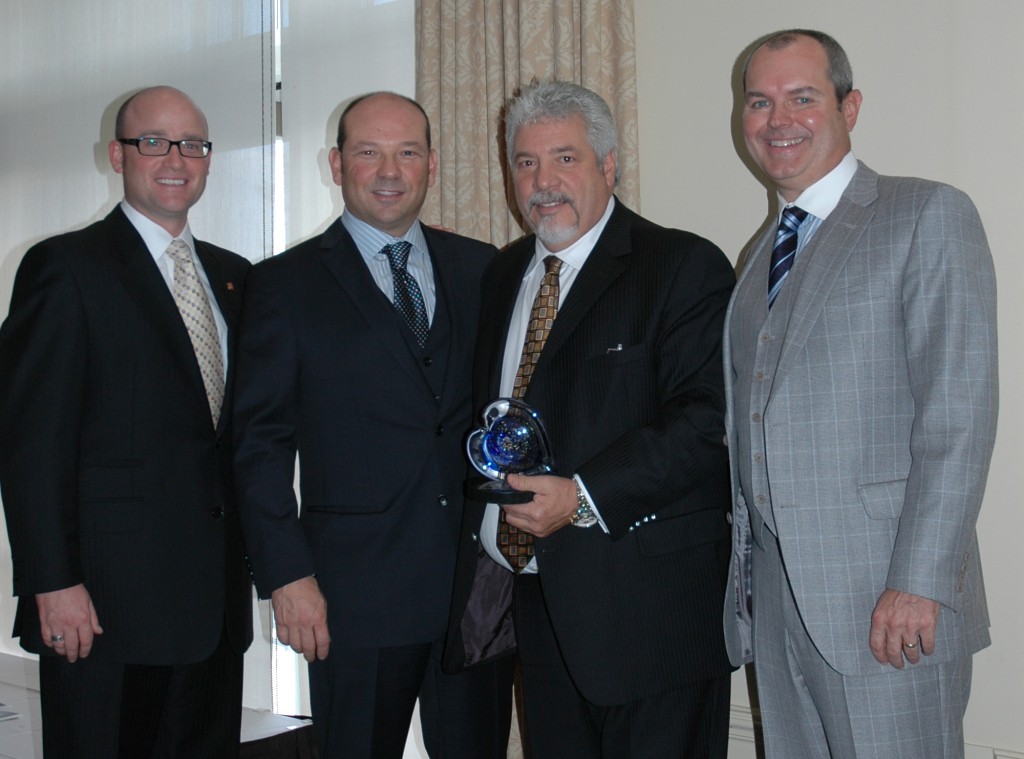
Fred & Lino Losani (centre) receive AFP award

The Association of Professional Fundraisers, Golden Horseshoe Chapter, honours one company each year for its philanthropic support to the community. This year that honour went to Losani Homes, recognized for their leadership and community spirit at a luncheon in November. The company supports many worthwhile causes, including the Community Child Abuse Council, Hamilton Food Share, and the Good Shepherd. And their support is increasing, reaching further to do more for the community. That takes not only a healthy bottom line in business terms, but also a commitment to ongoing philanthropy that is not simply based on quarterly results. Kudos to them for demonstrating just such a commitment and strengthening this community in so many ways.


Old Spice?

9 11 2010

Marketing magazine recently reported that Canadians are fans of the current Old Spice advertising campaign (“You like the way I look. Of course you do.”). Not only was it the most recognized campaign, it was also the best liked in this country (least liked? The family chasing the Dairy Queen Blizzard truck).

Flash back for a moment to 1965 and imagine the likelihood of either of these marketing campaigns being successful. A naked guy taunting us from the shower? A family drive with Mom on the hood of the car trying to grab hold of an ice cream truck? Doubtful these would ever have been conceived, let alone aired and memorable. My point here is that things have changed considerably in the way marketing reaches us. More disturbing to me is the change in how it affects us, and what has become acceptable to so many of us.

The so-called “prime time” viewing slots on television have opened up to include programming that once was restricted to much later hours and intended for adults only. Shows like “Pimp My Ride” and “Desperate Housewives” are now airing when young kids are still in their living rooms. Not that long ago, Brooke Shields caused a tremendous uproar by exposing her navel and midrift in an advertising campaign. Bratz dolls have sexed up their wardrobes to the point that once-fashionable Barbie has now donned similar garb in order to stay “trendy” and competitive. The cast of Glee on the cover of GQ magazine has been in the news for its racy portrayal of highschool kids, and children have come to know firefighters in most communities as heroes and calendar pinups.

There’s only one common element in all this, and it’s money. Whatever sells goes. And we buy it. Every lowdown, inappropriate and disrespectful moment of it. Maybe our filters are so tired from trying to screen and distinguish among all this stuff that they just don’t work anymore. Or maybe we’ve just become numb to all the skin and sex and selling. Old Spice sales reportedly are up, and Bratz dolls are again being touted as a must-have item for the holidays this year. Trouble is, child abuse is up too. Domestic assaults are still a plague on families. Pornography still nets kids and ruins lives. The links are obvious. What we do about it is trickier.

Stop advertising? No. Censor more of this stuff? Governments won’t do it. Quit spending our money on the products and services that try to sell to kids with sex and violence? Now that just might work. I spoke to a mother the other day who had been trying to explain to her 8-year old why a particular mannequin’s outfit was inappropriate for school (mini skirt, lacy tights, spaghetti strap/sequin top). It’s not easy. I admire her taking a stand though, and she showed that it can be done (and done at any age) with patience and love. She told me she’d rather put up with a few tantrums than risk the alternative.

Can we find more ways to reinforce the appropriate, and gradually reduce the inappropriate, from our lives and the lives of young children? Can we do a better job of turning trashy TV into teachable moments for kids? I think so. And I tip my hat to all those parents out there who are trying to do just that every day. Their task is daunting, and they could use our help and reinforcement. Whether you have children or not, take opportunities to voice your disapproval when the merchandise in the next store you visit falls well short of the mark for appropriateness. As I often hear teachers and parents telling children, “use your voice”.

Photo: spreadshirt.com