Wielding Power & Influence

7 11 2011

People in power (and men, in particular) continue to make news headlines for their abuse not only of influence but of children. First we saw the horrific video of a Texas family law judge beating his daughter while spewing a venomous tirade of foul and hurtful language. Next it was former Penn State athletics official, Jerry Sandusky, charged with sexually assaulting eight boys between 1994-2009. In this latter case, other school officials have been charged with perjury and with failing to meet their duty to report suspected or known threats to children and an ongoing investigation continues.

Adding to the Penn State scandal, the accused continued to use the university’s facilities after his retirement in 1999 for his work with The Second Mile, a charity he founded in 1977 for at-risk kids. The organization’s web site lists a who’s who of sports icons and hall of famers on its honourary board (including golf great Arnold Palmer, Heisman Trophy winner John Cappelletti, former Steelers Jack Ham and Franco Harris, retired football coach Lou Holtz, current Penn State football coach Joe Paterno, baseball’s Cal Ripken Jr., actor Mark Wahlberg, and corporate notables from Hershey Foods, Quaker State, Ortho Pharmaceutical, and KMart). One wonders how their potential power and influence might be wielded given the circumstances.

“This is a case about a sexual predator who used his position within the university and community to repeatedly prey on young boys,” said state Attorney General Linda Kelly. Despite being arraigned on 40 criminal counts, Sandusky has been released on bail.

The Texas judge, meanwhile, will apparently not face charges due to the length of time that has elapsed since the (videotaped in 2004) beating took place.  Police in the Texas jurisdiction where Aransas County Court-at-Law Judge William Adams resides have announced that they “believe that there was a criminal offense involved and that there was substantial evidence to indicate that and under normal circumstances … a charge could have been made” but that the statute of limitations for such charges stands at five years (CBS News). An investigation by the state’s judicial conduct commission and the Texas Department of Family and Protective Services is still pending.

These are headlines that have crossed international date lines, but will soon simply become state, and then local, coverage as yet another round of high profile cases dims from the spotlight. Whether you live in Texas or Pennsylvania, or in Ontario, it’s ultimately up to us whether the conversation continues…what do we think about a statute of limitations on crimes like child abuse (that often don’t surface for many years)? How do we feel about sexual predators successfully using youth programs to connect with kids? And what do we imagine is the best we can do to help the children who fall prey to these criminals (or may)? What’s our potential influence here, and are we wielding it in the best interests of children?






Classroom exercise sparks bullying debate

3 11 2011

This one has me scratching my head. Let’s see where you weigh in on the debate raging about a New York teacher’s efforts to enlighten her students about the impact of bullying…

If you haven’t already heard about this (now “viral”) item, it’s bouncing around the online news outlets and the blogosphere with lightning speed.

A teacher in New York was teaching her class about bullying and gave them the following exercise to perform. She had the children take a piece of paper and told them to crumple it up, stamp on it and really mess it up but do not rip it. Then she had them unfold the paper, smooth it out and look at how scarred and dirty is was. She then told them to tell it they’re sorry. Now even though they said they were sorry and tried to fix the paper, she pointed out all the scars they left behind. And that those scars will never go away no matter how hard they tried to fix it. That is what happens when a child bullies another child, they may say they’re sorry but the scars are there forever. The looks on the faces of the children in the classroom told her the message hit home.

So what’s the debate? Well, one camp is applauding what they see as a valuable and lasting lesson about the impact of bullying. The other camp is suggesting that this exercise gives bullies reinforcement for their actions by confirming the hurt they can cause. The former notion is an easy one…make an impression on kids, get them thinking about a serious subject, leave them to ponder their position. The latter, however, would appear to be rooted in a firm belief that bullies are a) not already aware of the effect they have, and/or b) motivated by inflicting hurt or harm. It’s certainly not the most optimistic point of view.

The thumbs-up side (supporting this teacher’s exercise as a positive one) appears to be leading the debate by a substantial margin, judging by the online posts and comments I have sampled. That there is discussion, dialogue, or debate at all is good thing. Feel free to add your thoughts.


October is Child Abuse Prevention Month

2 10 2011

To educate yourself about child abuse, and for information about what each of us can do, please visit www.childabusecouncil.on.ca.

To support the work of the Community Child Abuse Council, marking its 35th anniversary this year, join the fun on October 21st at the Mad Hatter’s Ball: www.the2011mhb.com.


“The Cruelty Crisis”

14 08 2011

Dr. Brené Brown

Here’s an interesting and thought-provoking take on bullying from Dr. Brené Brown (Professor and researcher, University of Houston, Graduate College of Social Work). She draws our attention not to the kids we typically associate with schoolyard trauma or to the teens whose angst can have devastating results, but to our own (adult) behaviours and our society’s tolerance of cruelty. Recommended reading.

http://www.psychologytoday.com/blog/ordinary-courage/201010/the-cruelty-crisis-bullying-isnt-school-problem-its-national-pastime


1 in 3 Women

4 04 2011

Ontario’s new Sexual Violence Action Plan: Changing Attitudes, Changing Lives addresses a “serious and pervasive” problem in this province. It speaks frankly (“violence against women devastates lives – it has no place in society and it will not be tolerated”) and includes a commitment of $15 million over four years ($5.2 M for public education campaigns, $1.6 M for professional training and education, $3 M for sexual assault centres, $3.7 M for interpreter services, $1.95 M for anti-human trafficking initiatives). 

Many Ontarians don’t realize the alarming statistics surrounding sexual violence and its prevalence in the lives of far too many women. One in three women will experience some form of sexual assault in their lifetime. Sexual violence crosses all social boundaries, affects women of every age and cultural background, and has devastating impacts on the lives of victims and their families as well as the well-being of society as a whole. [Laurel Broten, Minister Responsible for Women’s Issues, Sexual Violence Action Plan, March 2011].

The plan updates the Province’s former “domestic violence” action plan (2004) and addresses crimes such as sexual assault, sexual exploitation through human trafficking, sexual harassment, and sexual exploitation using technology and the Internet. It focuses on sexual violence against those 16 years of age and older (the Plan reports that separate initiatives are being developed for children and for men).

Many people only think of sexual violence as a very violent crime that happens between strangers – the perpetrator lurking in a dark alley or in the bushes. In reality, most sexual assaults are committed by someone known to the victim – an acquaintance, date, friend, colleague or family member – and often it occurs in private places, like the victim’s home [Ontario’s Sexual Violence Action Plan].

The Plan acknowledges that current statistics are alarming and that women across Ontario live in fear. The crime that is sexual violence won’t be curtailed successfully by any one effort or approach alone, thus it is heartening to see prevention as well as post-incident response included in the Province’s approach. The stated vision in the Plan is that “Ontario is a place where all women live in safety, and are free from the threat, fear or experience of sexual violence”. Published progress reports are promised after two and four-year intervals (2013 and 2015).

No less than 16 provincial Ministries are listed in the Plan as partners in the effort and members of the Ministerial Steering Committee on Violence Against Women, and the Plan highlights several collaborative approaches. It is nonetheless unfortunate that the leadership in launching this Plan came from the Minister Responsible for Women’s Issues. Sexual violence is not a “women’s issue”. But the Plan does include a request from the Province for changes to the Criminal Code of Canada and that’s a positive step in the battle against electronic victimization (among the newest threats). Also welcomed is the Province’s financial investment in education, prevention and victim response initiatives.

For a full version of the 23-page Plan click here: Ontario’s Sexual Violence Action Plan 2011.


Searching for Porn?

31 01 2011

I ask this question because, astoundingly, the statistics collected for this web page tell me that among the top search phrases that lead people to this page are those of people looking for porn. “Illegal girls” is one such phrase. “Young porn” is another. There are search phrases in Russian and others that include graphic references. Ironic isn’t it? A search for illegal images or pornographic content relating to children connects you to the web site of a consultant whose work includes partnering with the very agencies trying to stop child porn and support its victims!

If you found this page “by accident”, take a moment to look around this site before you continue your search for child pornography (you won’t find any here). Read some of my past posts about the damage done to children by our sexually toxic environment, and think about the part you are playing in inflicting that damage. Read about the agencies who are struggling to keep up with waiting lists for trauma treatment services that are in such huge demand. Ask yourself if you’ll still be interested in the same search parameters 3 or 5 years from now, and then (assuming the answer is no) think about whether a passing interest is worth the pain it causes (child porn + fans = kids + trauma). If the answer is yes, on the other hand, please seek help.


Safer Internet Day

22 01 2011

Check out the link below to receive information from the Canadian Centre for Child Protection  about Safer Internet Day, February 8, 2011 (including a reminder closer to the date if you’d like one):

http://www.saferinternetday.ca/app/en/

CCCP’s web site also offers valuable information and tools, so check that too:

http://protectchildren.ca/app/en/home

You’ll find education, awareness and prevention materials as well as research, a parent survey and access to CyberTip!ca, a tipline for reporting online sexual exploitation of children.

Resources for children and teens of all ages are provided, and are suitable for passing along to young people who use the Internet or text messaging, or are otherwise active online. A wealth of valuable information to be shared.


Hamilton needs more than policing to end violence

12 12 2010

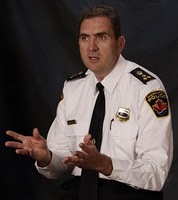
Hamilton’s new Mayor, Bob Bratina, has praised recent efforts by Hamilton Police Service (and particularly the ACTION unit) at reducing crime in the downtown core. The Dundas News reports that between May and November of this year, the special ACTION unit’s 40 officers made 657 arrests, laid 960 charges, seized more than $400,000 in illegal street drugs and issued 3,250 offense tickets. Muggings were down, as were life-threatening calls.

(photo: thehamiltonian.net)

Police Chief, Glenn De Caire, told a recent press conference that he expects to see the crime rate go up as reporting and enforcement efforts continue, but that this translates into increased safety. This is good news for our troubled downtown core, and a commendable accomplishment for our police service. Mayor Bratina has pointed to unruliness, loitering, yelling and public disorder as embarrassing indicators of the downtown’s problem areas (especially the intersection of James and King Sts.). But he and Council will need to look much further and extend their reach considerably if they are genuinely committed to reducing violence in this community.

The focus on downtown, aside from being Mayor Bratina’s ward, has much to do with exposure. It’s part of the city that is on display to all who pass through, and its shady reputation is an oft-cited reason for shopping elsewhere. Those who have worked in the core know that it is an eye-opening sight on any typical day. And yes, there are incidents involving violence. But the bigger picture has yet to be addressed by our elected leaders.

Violence against women, child abuse and sexual exploitation, and elder abuse are (to our shame) alive and well here in Hamilton. These are significant concerns as well as repugnant crimes. No community can claim to be making ground in anti-violence efforts while these horrific crimes continue. It matters not that the “jurisdiction” for addressing these crimes does not rest solely at the municipal level. Our city’s leaders must be the loudest voices among those demanding resources and action from all levels of government. It matters not that rates decline or rise from one year to the next – a sexually abused 3-year old is never an acceptable statistic.

What does matter is that we see these violent crimes as a community-wide issue. Our tolerance for abuse must be zero, and our collective response to the victimization of our citizens must be loud and clear – we  expect the prevention of violence to be a priority in all City actions. That will help to turn attention to the root causes behind some of these crimes, and to the lobbying

Mayor Bratina (photo: Spectator)

and advocacy efforts that are required of our city leaders in order to address those causes. In the same way that we are acting to eliminate poverty in Hamilton, we must act to eliminate violence. The police will be crucial partners in these efforts, but we can’t reasonably expect them to prevent violence on their own.

MPP Sophia Aggelonitis has expressed her concern about these issues in the past, and recently cited the provincial government’s commitment of more than $1 million to Hamilton as part of her government’s anti-violence strategy. We should expect to see part of this money earmarked for violence prevention that goes beyond policing to address the victimization of children, seniors, and women as well as prevention of violent crime in general. Sure, we’d like to see fewer fights in front of Jackson Square. But tidying up the unsightly facade downtown won’t do much in making Hamilton the best place in which to raise a child. In truth, much of the violence in this community is hidden and too rarely spoken about. Elder abuse doesn’t tend to happen on busy streets downtown, nor does child pornography appear in public places very often. These crimes happen in the shadows. They happen in homes. They happen in all parts of Hamilton. And each time they do, the victims are our neighbours, our family members, our friends. These are ugly crimes that leave lasting scars. Preventing them must be high on our new City Council’s agenda.


Old Spice?

9 11 2010

Marketing magazine recently reported that Canadians are fans of the current Old Spice advertising campaign (“You like the way I look. Of course you do.”). Not only was it the most recognized campaign, it was also the best liked in this country (least liked? The family chasing the Dairy Queen Blizzard truck).

Flash back for a moment to 1965 and imagine the likelihood of either of these marketing campaigns being successful. A naked guy taunting us from the shower? A family drive with Mom on the hood of the car trying to grab hold of an ice cream truck? Doubtful these would ever have been conceived, let alone aired and memorable. My point here is that things have changed considerably in the way marketing reaches us. More disturbing to me is the change in how it affects us, and what has become acceptable to so many of us.

The so-called “prime time” viewing slots on television have opened up to include programming that once was restricted to much later hours and intended for adults only. Shows like “Pimp My Ride” and “Desperate Housewives” are now airing when young kids are still in their living rooms. Not that long ago, Brooke Shields caused a tremendous uproar by exposing her navel and midrift in an advertising campaign. Bratz dolls have sexed up their wardrobes to the point that once-fashionable Barbie has now donned similar garb in order to stay “trendy” and competitive. The cast of Glee on the cover of GQ magazine has been in the news for its racy portrayal of highschool kids, and children have come to know firefighters in most communities as heroes and calendar pinups.

There’s only one common element in all this, and it’s money. Whatever sells goes. And we buy it. Every lowdown, inappropriate and disrespectful moment of it. Maybe our filters are so tired from trying to screen and distinguish among all this stuff that they just don’t work anymore. Or maybe we’ve just become numb to all the skin and sex and selling. Old Spice sales reportedly are up, and Bratz dolls are again being touted as a must-have item for the holidays this year. Trouble is, child abuse is up too. Domestic assaults are still a plague on families. Pornography still nets kids and ruins lives. The links are obvious. What we do about it is trickier.

Stop advertising? No. Censor more of this stuff? Governments won’t do it. Quit spending our money on the products and services that try to sell to kids with sex and violence? Now that just might work. I spoke to a mother the other day who had been trying to explain to her 8-year old why a particular mannequin’s outfit was inappropriate for school (mini skirt, lacy tights, spaghetti strap/sequin top). It’s not easy. I admire her taking a stand though, and she showed that it can be done (and done at any age) with patience and love. She told me she’d rather put up with a few tantrums than risk the alternative.

Can we find more ways to reinforce the appropriate, and gradually reduce the inappropriate, from our lives and the lives of young children? Can we do a better job of turning trashy TV into teachable moments for kids? I think so. And I tip my hat to all those parents out there who are trying to do just that every day. Their task is daunting, and they could use our help and reinforcement. Whether you have children or not, take opportunities to voice your disapproval when the merchandise in the next store you visit falls well short of the mark for appropriateness. As I often hear teachers and parents telling children, “use your voice”.

Photo: spreadshirt.com


Changing our Sexually Toxic Environment

2 11 2010

Cordelia Anderson

If you read this blog regularly, you know that Cordelia Anderson recently spoke about our “sexually toxic environment” as part of a discussion here in Hamilton during Child Abuse Prevention Month (October). Her insights and revelations about “porn culture” and what we must do to reverse the hijacking of our sexuality fired up those who were fortunate enough to be present – and I hope that lasts! In the meantime, I took to heart Cordelia’s message about doing what we can, in our own circles of influence, to rid ourselves of the overly sexual (“hypersexualized”) danger zone in which we (and youngsters) live.

While traveling, I now request a “porn free” room when I make hotel reservations. This means insisting on a room that doesn’t have pay-per-view pornography or has blocked the availability of it during my stay. Families as well as individuals can do this easily…and the more who do, the more likely we are to find greater availability of these rooms.

While shopping, I no longer turn away and ignore inappropriate or offensive merchandise. I recently pointed out to a shopkeeper that a particularly sexual t-shirt had no place on display in a store selling children’s clothing. In another, I complained about a line of merchandise called “Porn for Women” that was prominently displayed in the gift shop of a heritage site (go figure). In both cases, I elected to shop elsewhere and let them know why this was my decision.

These individual efforts do pay off. After complaining about a rubber tag for sale in a local dollar store (“On Myspace I’m Legal”) – displayed next to Dora The Explorer and other kids’ items – the store not only removed it from their inventory but also invited me to write to their head office and explain why it’s unacceptable. Pointing out the inappropriateness of sexualized merchandise can lead to an “aha” moment for sales clerks, store managers, buyers and distributors. Community-minded corporations will often respond when made aware of merchandise that might otherwise have slipped through their radar.

There are a host of things we can do, each of us, to change our environment so that these hypersexualized examples are not considered “normal”. First and foremost, remember that money talks. Spend it strategically. If you don’t think dolls for young girls should be dressed in feather boas and miniskirts, don’t buy them. And let store staff know why you won’t spend your money on these items. If you don’t think the lyrics to certain songs are healthy for the sexuality of our young people, point that out to them. Explain what’s degrading or objectifying about the words, and offer empowering messages instead.

Simply starting a conversation can be enough to get the ball rolling. How do you feel about the mainstream TV line-up including shows like “Pimp My Ride”? What about the results you get when you search for “porn” on Google? For an interesting comparison, Cordelia Anderson suggests trying that search and then searching for “healthy sexuality” and seeing the difference in results (and the time it takes).

October was Child Abuse Prevention Month. November is the month set aside to talk about woman abuse and to raise awareness about the problem. If we only address these issues once a year, we can pretty much give up on making any inroads. If we continue to let media and merchandisers degrade and objectify women, we won’t get very far either. So speak up, engage others, and spend strategically. It will take all of us to make a difference in what “normal” consists of and whether messages about healthy sexuality are available to young people.

“The need for change bulldozed road down the center of my mind”.

Maya Angelou